


Field Notes from the Road
There are some Shadows that strike like storms. The Echo Family is not among them. These creatures rarely arrive with claws, fangs, or overwhelming force. Instead, they arrive with thoughts. Questions. Memories. Possibilities. A single sentence that refuses to leave.
Among all the Shadow Families documented by the Caravan, the Echo Family appears uniquely interested in the stories travelers tell themselves. Not reality itself. The interpretation of reality. A conversation becomes a replay. A mistake becomes an identity. A possibility becomes a regret. A future becomes a prediction. An uncertainty becomes a maze.
The members of the Echo Family seem to understand something many travelers overlook: Human beings do not merely experience life. We explain life. We narrate it. We build stories around what happened, what might happen, and what should have happened.
Most of the time this gift serves us well. Sometimes it becomes a prison.
That is where the Echo Family waits.
Shared Characteristics
Though the creatures differ greatly in appearance and behavior, they seem to share several common traits.
Most Echo creatures:
Feed on uncertainty.
Thrive in unanswered questions.
Grow stronger through repetition.
Prefer thought to action.
Rarely create problems themselves.
Amplify problems already present.
This final trait appears especially important.
The Echo Family rarely invents fears. Instead, they discover fears that already exist and teach them how to speak louder.
Why They Are Difficult to Recognize
Many Shadows feel foreign. The Echo Family feels familiar. That may be their greatest advantage.
Travelers often mistake Echo creatures for:
intelligence,
preparation,
wisdom,
responsibility,
caution,
reflection,
or self-awareness.
And to be fair, many of those qualities are valuable. The distinction is subtle. Reflection creates understanding. Echoes create loops. Preparation creates readiness. Echoes create delay. Awareness creates clarity. Echoes create noise.
I am increasingly convinced that most travelers do not recognize an Echo encounter until they notice one important sign:
They have been thinking for a very long time, yet somehow understand no more than when they began.
Known Members of the Family
Current Caravan records identify several notable members of the Echo Family.
Echo Keeper
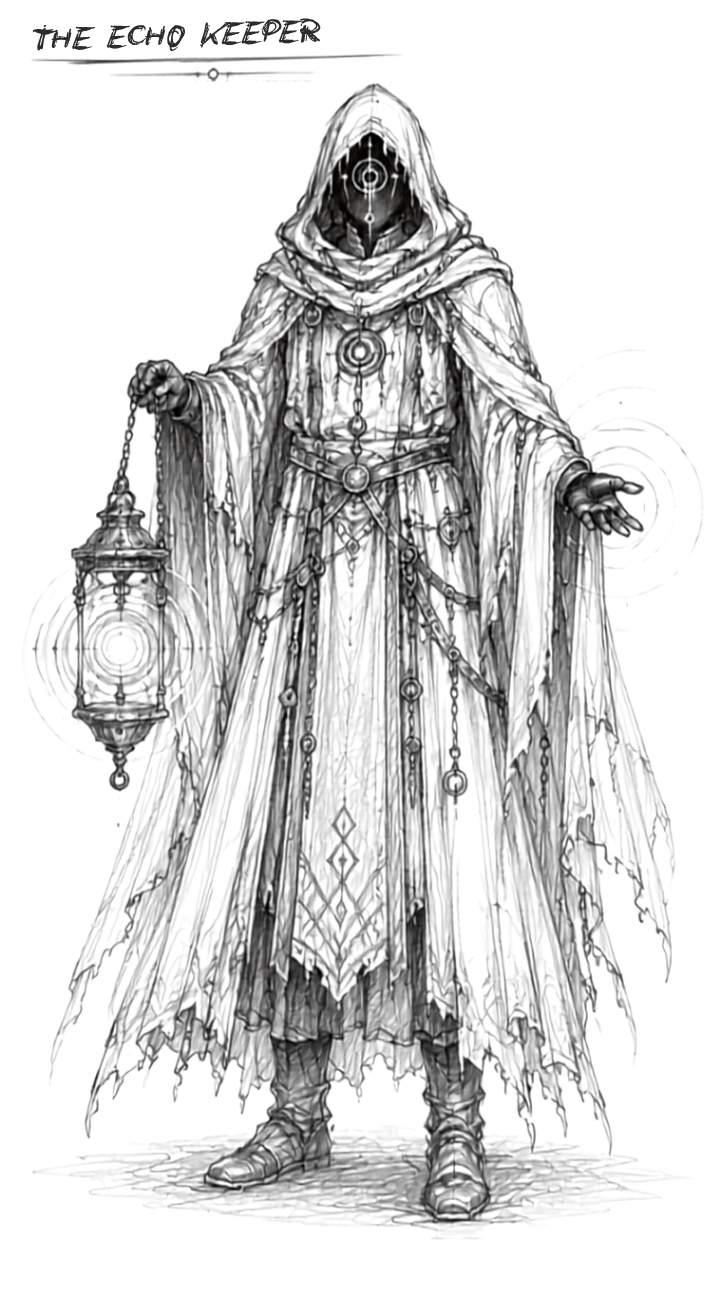
Collector of unlived lives.
Guards alternate futures and roads never taken.
Feeds upon regret and imagined possibilities.
Echo Weaver
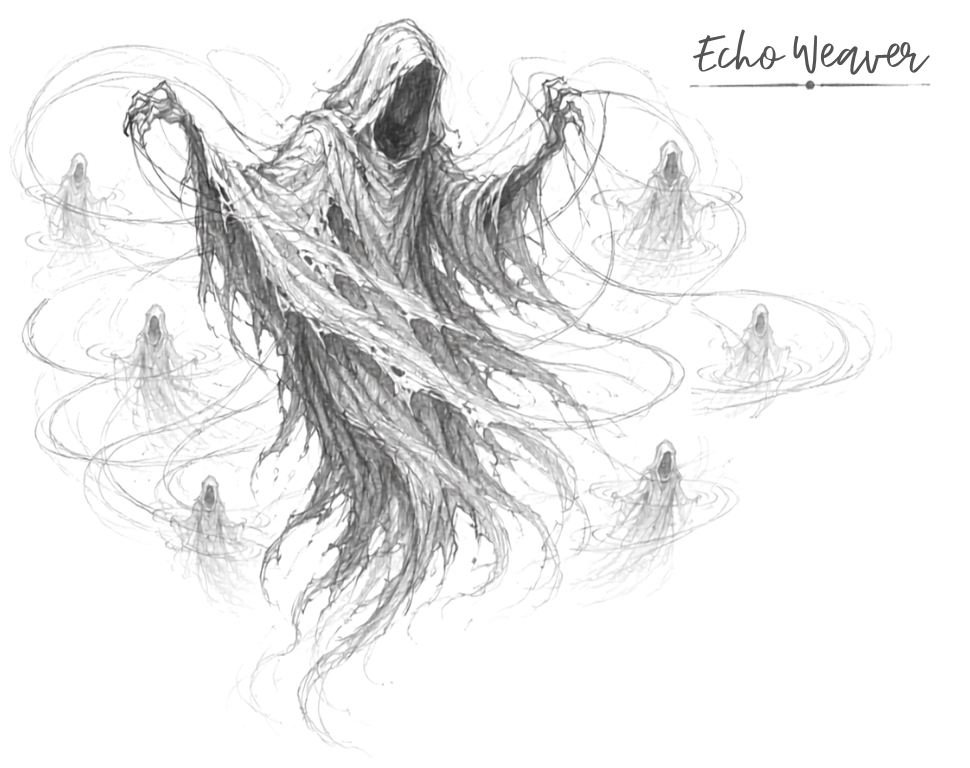
The spinner of endless mental threads.
Specializes in rumination and replaying conversations, decisions, and uncertainties.
Its web is built from repetition.
Thousand Voices
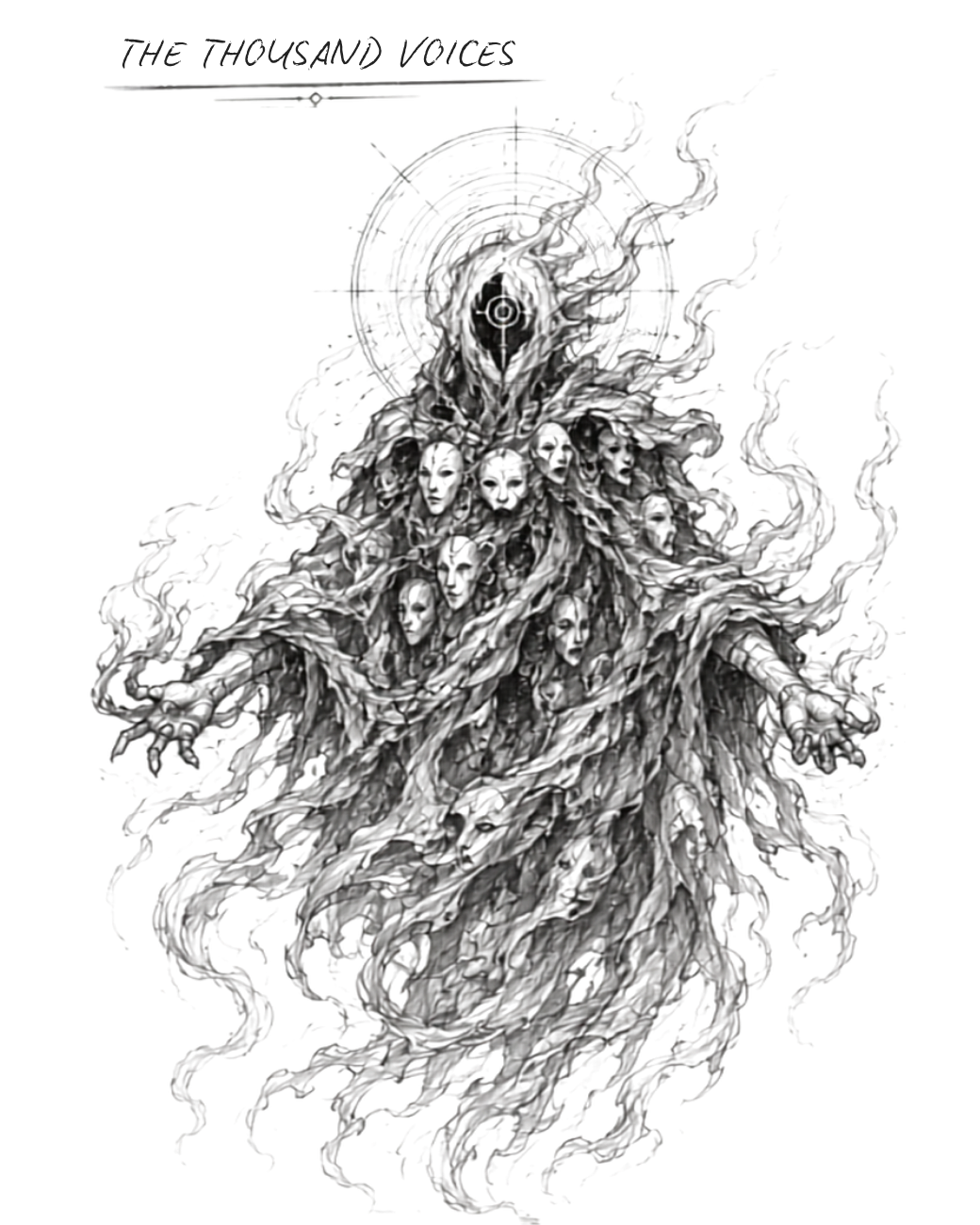
A chorus of competing possibilities.
Transforms uncertainty into overwhelm.
Thrives where decisions require courage.
Skeleton
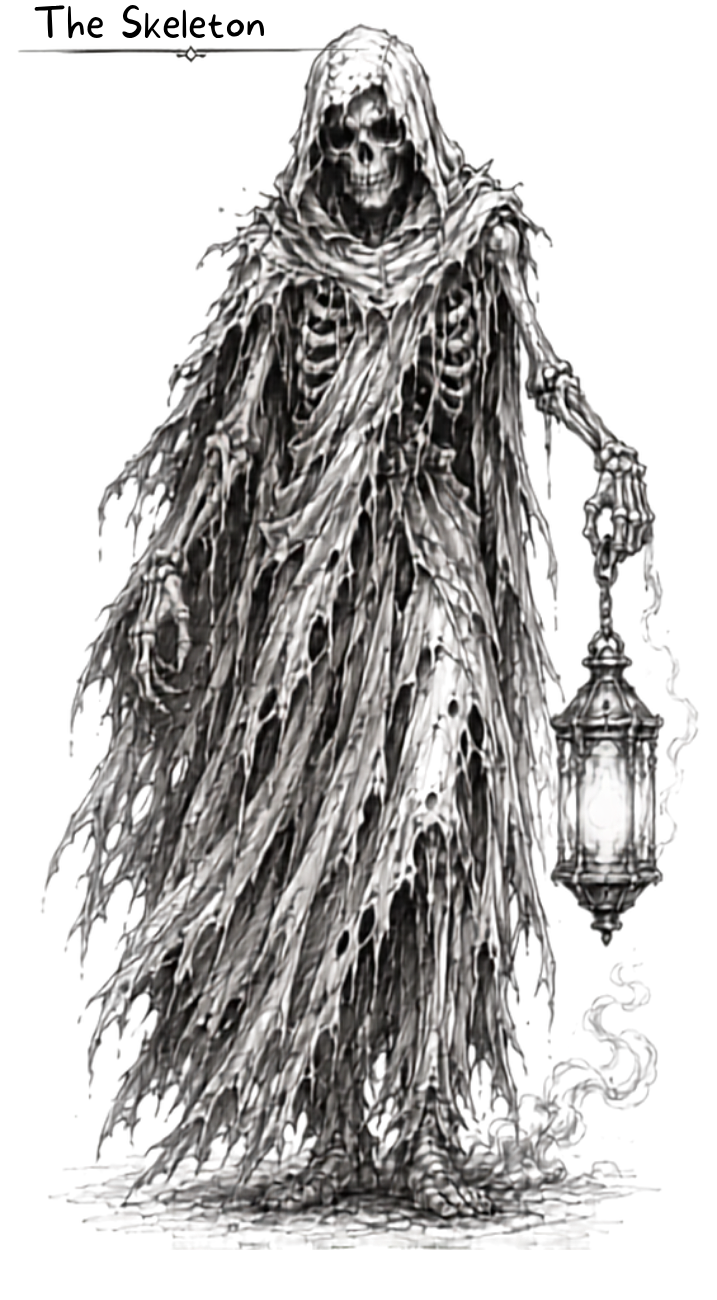
Bearer of old stories.
Drags past mistakes into the present.
Attempts to convince travelers that former versions of themselves still define who they are.
Audience Oracle
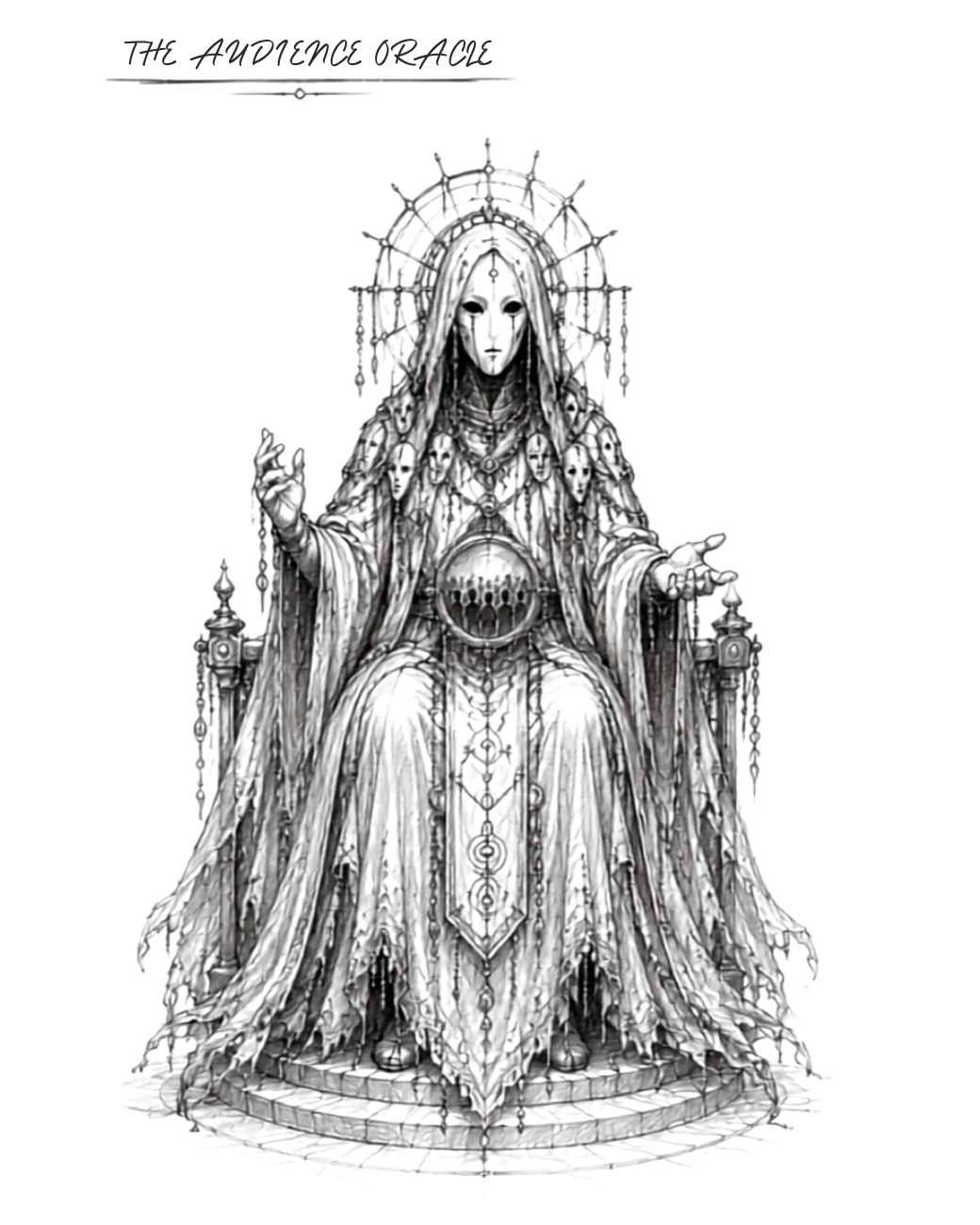
Master of imagined reactions.
Specializes in predicting judgment, approval, rejection, and future outcomes.
Often encountered near creative work, leadership, and visibility.
Current Theory
After years of Caravan reports, a pattern has emerged. The Echo Family appears less interested in pain than in continuation. Most Shadows seek to stop movement. The Echo Family seeks to delay movement. The traveler remains active. The mind remains busy. The analysis continues. The planning continues. The replaying continues. The traveler simply never leaves the campfire.
This may explain why encounters often feel productive while they are happening. Movement is replaced with simulation. The road is replaced with thought. The journey is replaced with rehearsal.
Ember's Observation
"I've noticed most Echo creatures hate simple actions."
"The moment somebody sends the message, publishes the thing, asks the question, makes the decision, or takes the first step, half the family suddenly loses interest."
"Apparently walking the road is very bad for their business."
— Ember
Questions for Further Study
Why does uncertainty strengthen nearly every member of the Echo Family?
Can reflection and rumination be reliably distinguished?
Why do imagined futures often feel more real than lived ones?
Does action naturally weaken Echo creatures, or merely interrupt them?
Are stories themselves dangerous, or only the stories we refuse to update?
The Caravan remains divided on these questions.